


The aluminium industry’s main challenge lies in the carbon intensive nature of the industrial processes that form the foundation of modern aluminium production. The widespread use of fossil fuels to power the smelting process is the main reason why the aluminium industry today accounts for two percent of global CO₂e emissions. In addition, the electrolysis process itself emits CO₂ when aluminium oxide and carbon react under a strong electric current to produce primary aluminium.
At the same time, aluminium has unique properties that make it an important enabler for the green transition, with demand for the light, versatile and infinitely recyclable metal expected to grow in line with the need to mitigate climate change. This is the paradox the aluminium industry needs to address. We must rethink how we make aluminium or even challenge the basic principles of aluminium production before the metal can fully step into the role as a more sustainable material for the future.
Kilos of CO2e emissions per kilo aluminium
1 Footprint below 4.0 kg CO2e, Hydro internal estimates
2 Source: International Aluminium Institute (2024)
From Hydro REDUXA to net-zero
Kilos of CO2e emissions per kilo aluminium
Hydro is determined to take the lead in the green aluminium transition through global efforts to decarbonize energy and production, produce for circularity, and recycle resources already in use. We are on track to reduce our own emissions by 30 percent by 2030 compared to the 2018 baseline. We stay committed to achieving net-zero emissions in aluminium production by 2050 or earlier.
This will be done by implementing cutting edge technology and stepping up efforts along the three main pathways of the company’s decarbonization roadmap:
- Phasing out fossil energy sources throughout the value chain
- Removing direct emissions from production processes
- Stepping up recycling of post-consumer aluminium scrap
Read more about our decarbonization efforts in the sections below.
Phasing out fossil energy in the value chain
By using renewable energy throughout the value chain, Hydro is able to deliver primary aluminium with a carbon footprint of about one fourth of the world average. To further reduce the footprint, we are working to introduce cleaner energy from mine to metal, both by phasing out carbon intensive fuels and exploring the application of renewable energy sources in production steps that have traditionally relied on fossil fuels.
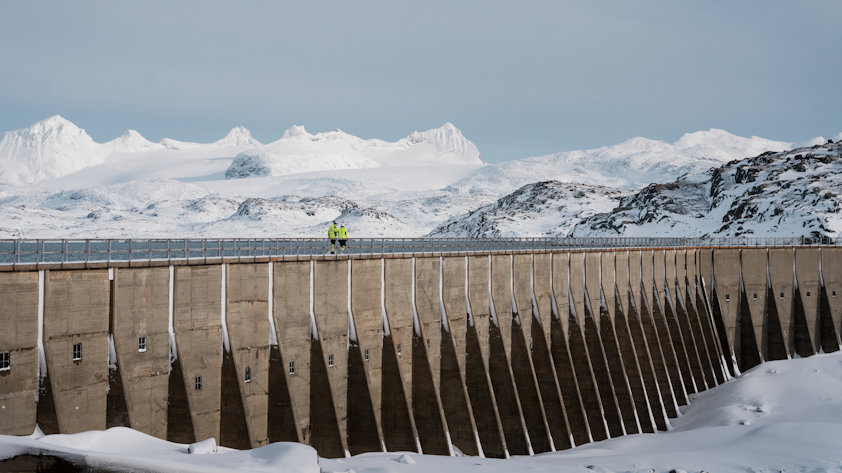
In Brazil, we have transitioned from heavy fuel oil to natural gas to fuel the alumina production process at Hydro Alunorte, the world’s largest alumina refinery outside China. This initiative alone has reduced the refinery’s annual CO₂ emissions by 700,000 tonnes. Additionally, Hydro Alunorte has introduced three electric boilers for steam generation. The introduction of renewable electricity for steam production reduces the annual carbon emissions from Alunorte by a further 550,000 tonnes.
These two initiatives are key to deliver on our strategy for a 30 percent reduction in greenhouse gas emissions throughout the value chain by 2030. By reducing the carbon footprint of the raw materials needed to produce aluminium, we will be able to deliver primary metal with a carbon footprint lower than 4 kg CO₂e per kg of aluminium.
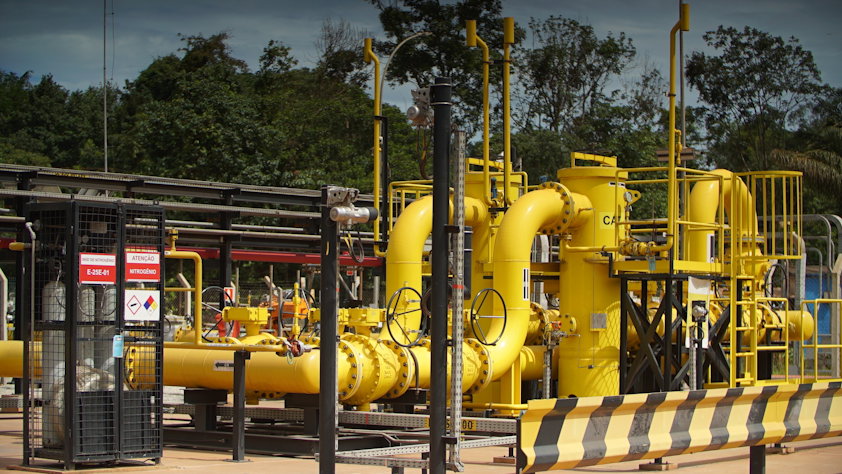
Traditionally, the aluminium industry uses fossil fuels to achieve the high temperatures required for both casthouse operations and production of carbon anodes. We are conducting research and development with the aim of replacing natural gas with carbon neutral energy sources to fuel these processes.
At Hydro Sunndal, Europe’s largest primary aluminium plant, we have replaced 70 percent of natural gas consumption for casthouse operations and anode baking with locally sourced biomethane. We also aim to switch from natural gas to biomethane in the baking furnaces of the carbon anode production facilities at the Årdal primary plant.
Hydro Sunndal is also testing plasma technology as an option to electrify casthouse furnaces, using the same renewable energy that powers our primary smelters. If successful, the pilot project has the potential to affect not only the aluminium industry, but also other hard to abate industries worldwide.
In the aluminium recycling facility in Høyanger, we are replacing natural gas with green hydrogen in one of the melting furnaces in an effort to unlock the decarbonization potential of hydrogen in aluminium production. The pilot project builds on the experience from Hydro’s world first industrial scale test of green hydrogen in aluminium recycling in June 2023.
With most logistic operations powered by fossil fuels, we are addressing the emissions in this crucial step of the value chain. Activities include transferring the tonnage transported by truck to sea, barge or rail, increased efforts to develop greener shipping routes in collaboration with suppliers, and using digitalization to improve incentive structures and transparency. The ambition is to achieve a 30 percent reduction in emissions from logistics by 2030.
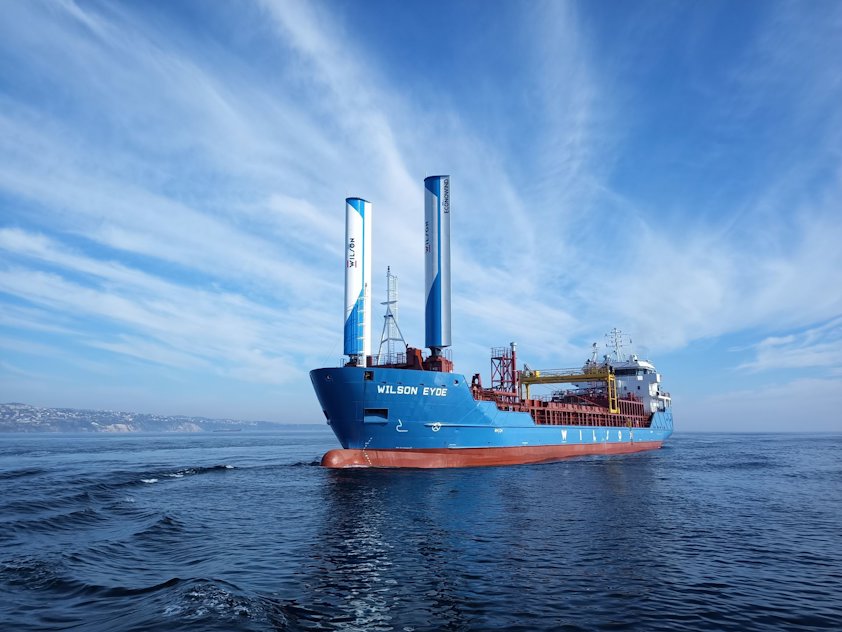
In 2025, “Wilson Eyde” entered service on a regular route between suppliers in Europe and Hydro’s production facilities in Norway. Equipped with both wind assisted propulsion and an AI based system for fuel optimization, the vessel represents a new generation of energy efficient ships being introduced into our logistics operations.
Removing process emissions
With their independent and almost simultaneous discovery in 1886 of an industrial process for making aluminium, Charles Martin Hall and Paul Héroult laid the foundation for all modern aluminium production. However, the Hall-Heróult electrolysis process inevitably emits CO₂ when an electric current is passed through aluminium oxide and carbon to form primary aluminium. We are challenging the basic principles of aluminium production by following several pathways of technology development, including an entirely new and groundbreaking process to eliminate carbon emissions from both electrolysis and anode baking.
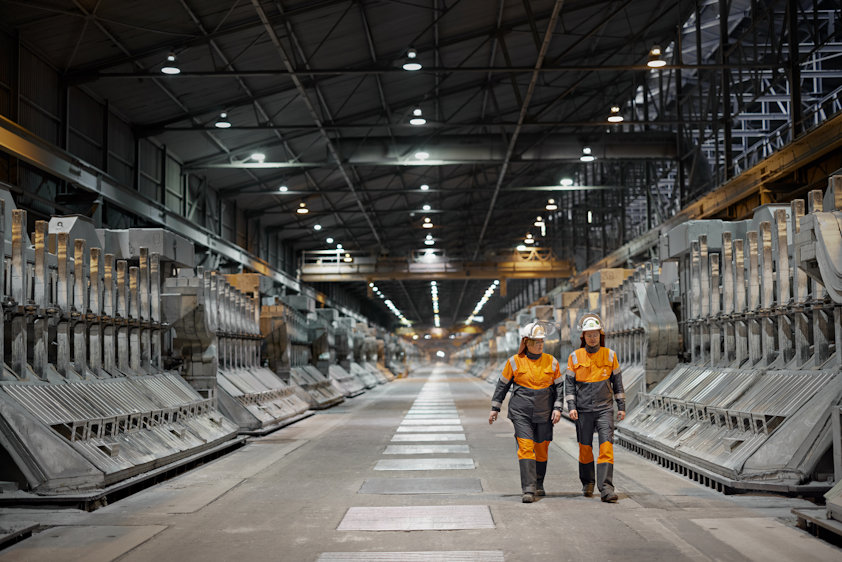
Under development by Hydro technologists since 2016, the proprietary HalZero technology is based on converting alumina to aluminium chloride prior to electrolysis. Chlorine and carbon are kept in a closed loop, thereby avoiding CO₂ emissions and emitting only oxygen instead. In 2023, the project won recognition at the COP28 global climate conference as an energy transition changemaker.
At the purpose built test center in Porsgrunn, Norway, our team of world class scientists are currently working to mature the different HalZero process steps. The aim is to start the construction of an industrial concept pilot facility towards the end of the decade, preparing HalZero for use in greenfield smelter capacity.
If successful, HalZero will be an emission free smelting technology that fully eliminates CO₂ emissions from both electrolysis and anode baking.
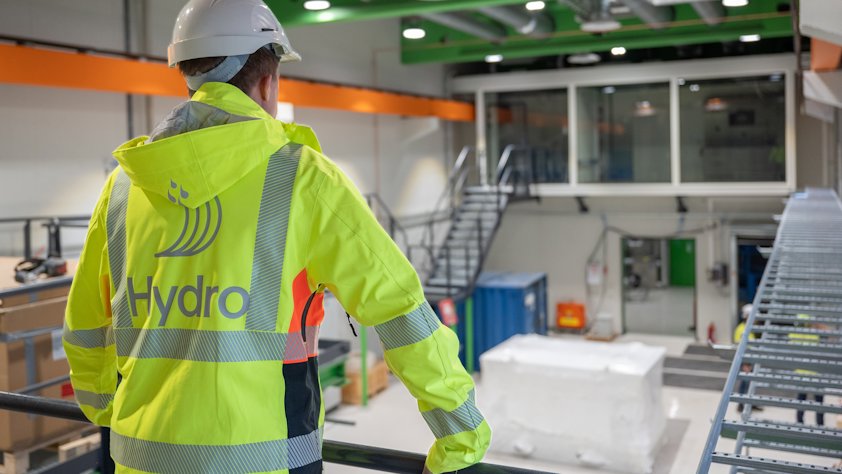
The HalZero technology will be matured in the tailor made test facility at the Hydro Aluminium Technology Center in Porsgrunn, Norway.
The smelting of aluminium through electrolysis is a carbon-intensive process. However, the resulting off-gas has a CO₂ concentration of only about 1 percent, which makes carbon capture significantly more challenging compared to higher concentration streams from fossil fuel power generation or other industrial processes. In addition, impurities in aluminium electrolysis off-gases make it uniquely difficult to capture CO₂ effectively with conventional CCS technologies.
This makes development of carbon capture and storage technology (CCS) for the aluminium industry very sector specific. With no readily available technology on the market, we have entered into a partnership with Rio Tinto to explore CCS technologies and accelerate deployment of commercially viable solutions. Our joint efforts include sharing R&D results and costs covering specific activities.
We are currently pursuing several pathways to find a cost-efficient solution and retrofit the existing Hall-Heróult aluminium smelters with CCS technology. After testing and piloting the most promising methods, our ambition is to have an industrial scale pilot running by 2030. In parallel, we are working to secure access to CO₂ transport infrastructure and storage in an emerging sector where roles and responsibilities are still being shaped.
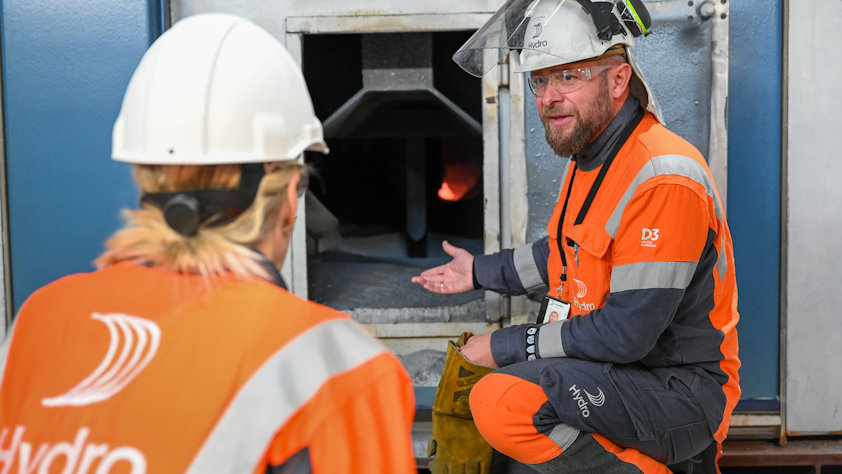
With the latest pre-bake technology in aluminium production, an electrolytic cell consumes approximately half a tonne of carbon for every tonne of aluminium produced. Carbon anodes are made up of fossil materials, but we are seeking to blend in biomaterials such as waste from forestry and food production into the anodes. Research and development is currently at an early stage.
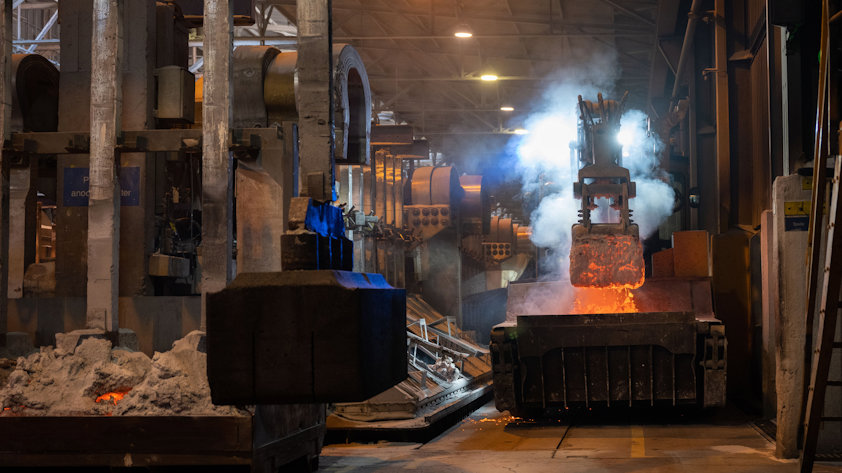
Since 1990, we have increased the production capacity of our aluminium smelters by 40 percent. Even so, we have managed to cut emissions from our smelters in Norway by more than 50 percent, mainly thanks to the full upgrade from the emission intensive Söderberg technology to modern pre-bake potlines in the 2000s. Since then, we have continued to perfect smelter operations, culminating in the Karmøy Technology Pilot to pioneer the world’s most climate and energy efficient primary production technology.
Improving operations is a continuous process, with significant efforts now focusing on digitalization. The green transition and the digital transition are closely linked, as digital technologies play a crucial role in resource management. Several ongoing digitalization projects are aimed at optimizing operations, improving efficiency, and driving innovation to cut both emissions and costs.
Stepping up recycling of post-consumer scrap
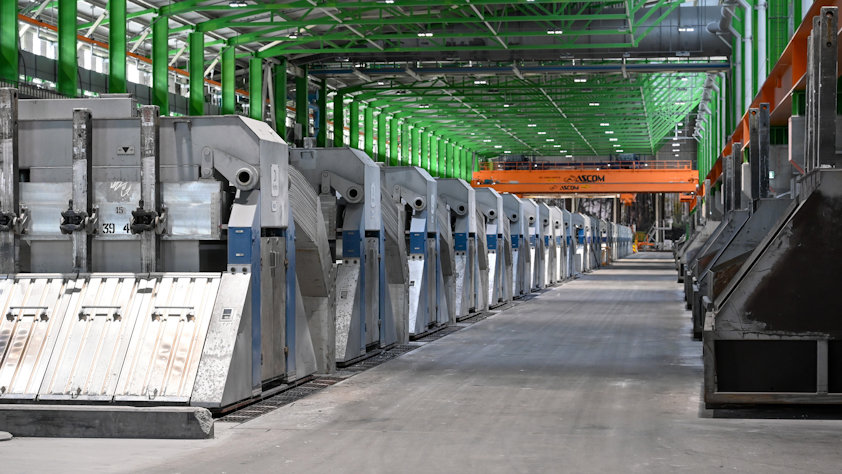
Aluminium is infinitely recyclable without loss of the properties that make it an important enabler for the green transition. Recycling of aluminium also takes only five percent of the energy required to produce primary metal in an electrolytic cell.
We offer recycled aluminium under the Hydro CIRCAL brand. It contains at least 75 percent post-consumer scrap and comes with a documented carbon footprint of just 1.9 kg CO₂e per kg aluminium, almost eight times lower than the global average in primary aluminium production.
Post-consumer scrap is also used in primary aluminium based production at Årdal and Høyanger. Depending on the share of post-consumer scrap, Hydro REDUXA low-carbon aluminium can be delivered with a documented carbon footprint of maximum 3 kg CO₂e per kg aluminium.
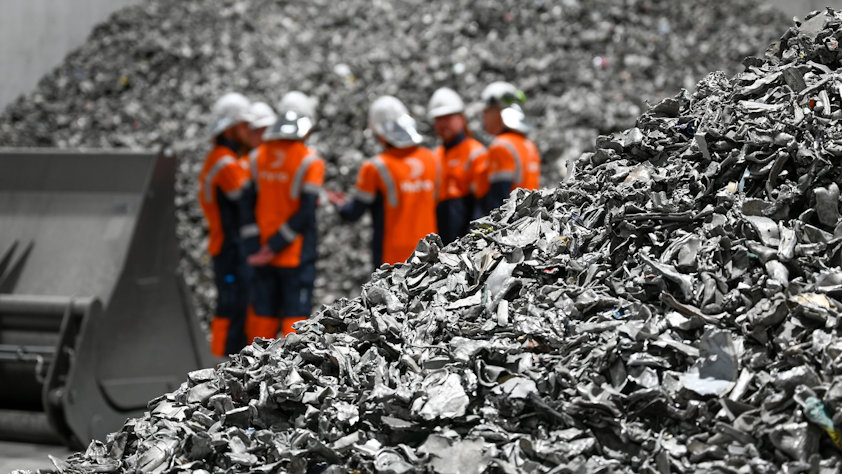
Unlike pre-consumer scrap, which originates from aluminium production and processing such as extrusion and rolling, post-consumer scrap has lived a past life as beverage cans, window frames, car parts or other consumer products. Its carbon footprint is close to zero, as emissions were already accounted for during the material’s initial production. This is why recycling more post-consumer aluminium scrap is vital for reducing the global footprint of aluminium production.
To achieve this, we are continuously exploring new possibilities both to source post-consumer scrap and develop advanced sorting technologies to allow an increased amount of used aluminium to be sorted, repurposed and given a new life.
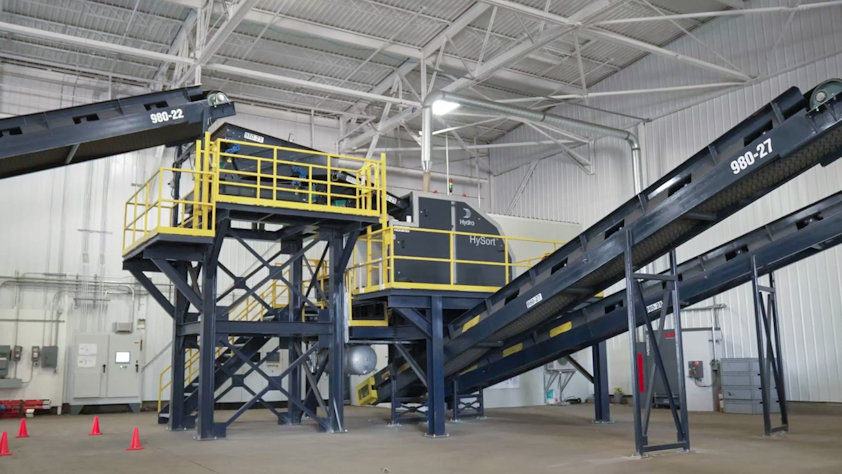
Our proprietary HySort technology, utilizing laser induced breakdown spectroscopy (LIBS), allows us to dig deeper into the scrap pile, sort and upcycle more challenging types of aluminium scrap. Pioneered at Hydro’s sorting hub in Dormagen, Germany, the technology was introduced to the U.S. market in September 2024 and at Nowa Sól in Poland in 2025.
Stepping up growth in recycling capacity is one of the key factors in our overall strategy towards 2030 to meet the increasing demand for low-carbon, recycled products.
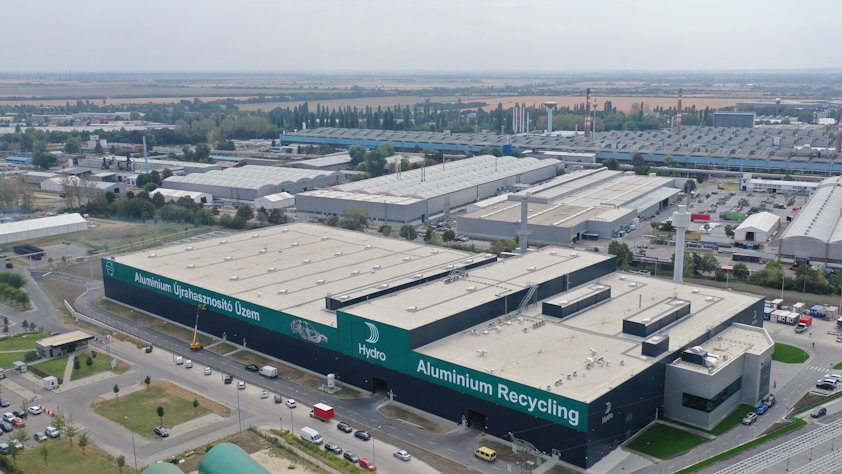
We have increased our recycling capacity by more than 650,000 tonnes over the last couple of years. Most of the increase has occurred in Europe, starting with the acquisition of Polish aluminium recycling company Alumetal in 2023, which significantly strengthened our recycling position in Europe. In September 2024, we opened our new aluminium recycling plant in Szekesfehervar, Hungary, with an annual capacity of 90,000 tonnes, to serve mainly the automotive market.
We have also been investing in new capacity in North America, including the greenfield recycling plant in Cassopolis, Michigan, which opened in November 2023. One-third of the production at the Cassopolis plant will be Hydro CIRCAL, containing minimum 75 percent post-consumer scrap.
Today we recycle aluminium at 35 plant facilities in Europe, North America and South America, with operations handled by our upstream and downstream aluminium business areas. New recycling capacity will be coming on stream no later than 2026, including a new plant in Torija, Spain with a capacity of 120,000 tonnes per year.
When using a high proportion of post-consumer scrap content in aluminium, the main challenge is how to meet the specific alloy requirements of the end products. This is possible only by blending a very precise mixture of scrap qualities.
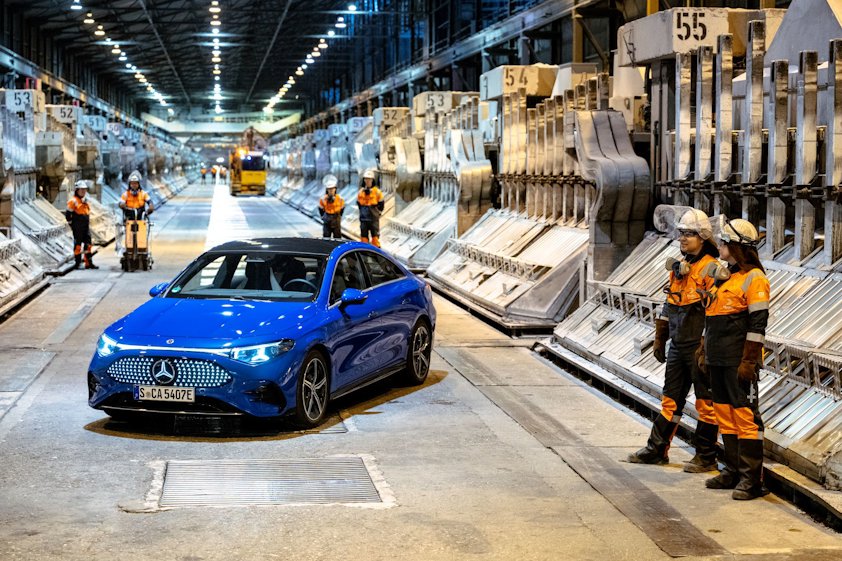
Increasing the share of recycled content requires further innovation. That is why technical collaboration, alloy research and development of new applications are included in the scope of our strategic partnerships with customers like Mercedes-Benz and Volvo Group.
Our partnership with Porsche was taken to a new level in July 2024 with an agreement that allows for capacity reservation for Porsche’s supply chain as well as development of new automotive alloys with higher recycled content.
Another milestone was reached earlier in 2024 when UK based bicycle company Brompton rolled out the first ever wheel rims made from 100 percent post-consumer scrap. It was the first time Hydro CIRCAL 100R, near-zero carbon, recycled aluminium, made it into a consumer product after rigorous product testing for safety, strength, durability and corrosion resistance.
Updated: November 20, 2025